
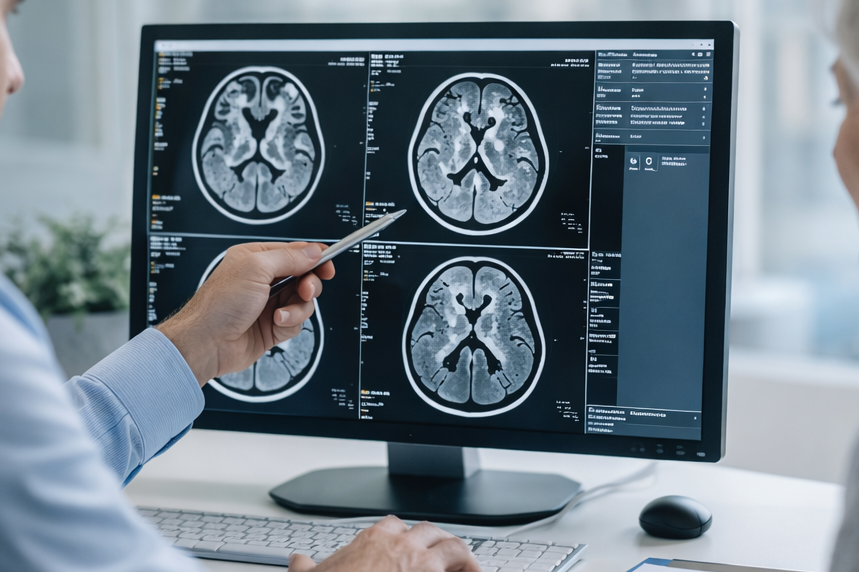
EEG (Electroencephalogram) Testing
Accurate brain activity assessment with clear clinical reporting to support confident diagnosis and treatment decisions.
EEG (Electroencephalogram) Testing
What is an EEG?
An EEG (Electroencephalogram) is a specialist neurophysiology test used to record the electrical activity of the brain.
Small sensors (electrodes) are placed on the scalp to detect and measure brain wave patterns. EEGs help identify abnormal electrical activity that may be associated with seizures, epilepsy, loss of consciousness, sleep disorders, or other neurological conditions.
The test is non-invasive and provides valuable information to support accurate diagnosis and ongoing management.
What is it used for?
EEG testing is commonly used to investigate:
- Suspected epilepsy or seizure disorders
- Blackouts, fainting, or unexplained loss of consciousness
- Abnormal movements or episodes of altered awareness
- Sleep-related neurological conditions
- Encephalopathy or altered mental state
- Monitoring known neurological conditions
What is an EEG?
An EEG (Electroencephalogram) is a specialist neurophysiology test used to record the electrical activity of the brain.
Small sensors (electrodes) are placed on the scalp to detect and measure brain wave patterns. EEGs help identify abnormal electrical activity that may be associated with seizures, epilepsy, loss of consciousness, sleep disorders, or other neurological conditions.
The test is non-invasive and provides valuable information to support accurate diagnosis and ongoing management.
What is it used for?
EEG testing is commonly used to investigate:
- Suspected epilepsy or seizure disorders
- Blackouts, fainting, or unexplained loss of consciousness
- Abnormal movements or episodes of altered awareness
- Sleep-related neurological conditions
- Encephalopathy or altered mental state
- Monitoring known neurological conditions
What to expect on the day
Clear, calm, and efficient – from setup through to reporting.
01 Arrive & setup
We’ll confirm your details, clinical history, and referral information. The clinician will explain the procedure clearly and ensure you’re comfortable before starting.
02 The Procedure
Electrodes are placed on the scalp to record brain activity. You’ll be asked to relax and may perform simple breathing or light-response tasks. The test is painless and typically lasts 20–40 minutes.
03 Results & Plan
Your EEG is reviewed by an experienced neurophysiology clinician. A formal report is produced and sent securely to support diagnosis, follow-up, and treatment planning.
What to expect on the day
Clear, calm, and efficient – from setup through to reporting.
01 Arrive & setup
We’ll confirm your details, clinical history, and referral information. The clinician will explain the procedure clearly and ensure you’re comfortable before starting.
02 The Procedure
Electrodes are placed on the scalp to record brain activity. You’ll be asked to relax and may perform simple breathing or light-response tasks. The test is painless and typically lasts 20–40 minutes.
03 Results & Plan
Your EEG is reviewed by an experienced neurophysiology clinician. A formal report is produced and sent securely to support diagnosis, follow-up, and treatment planning.
How to prepare
To help ensure accurate results, please:
- Wash your hair the night before or morning of the test
- Do not apply hair products such as gel, spray, oil, or conditioner
- Wear comfortable clothing
- Continue taking your usual medications unless advised otherwise
- Bring a list of your current medications if possible
If your EEG requires sleep deprivation, you will be given specific instructions in advance.
FAQs
Is the test painful?
No. An EEG is completely painless. The electrodes sit on the scalp and do not deliver any electrical current.
How long does it take?
A standard EEG usually takes 20–40 minutes. Some specialised EEGs, such as sleep or prolonged studies, may take longer.
When will I receive results?
A formal report is typically completed shortly after your appointment and sent securely to your referring clinician to support next-step decision making.
Can I drive after the test?
Yes. EEG testing does not affect your ability to drive, and you can return to normal activities immediately afterwards (unless advised otherwise for specific study types).
How to prepare
To help ensure accurate results, please:
- Wash your hair the night before or morning of the test
- Do not apply hair products such as gel, spray, oil, or conditioner
- Wear comfortable clothing
- Continue taking your usual medications unless advised otherwise
- Bring a list of your current medications if possible
If your EEG requires sleep deprivation, you will be given specific instructions in advance.
FAQs
Is the test painful?
No. An EEG is completely painless. The electrodes sit on the scalp and do not deliver any electrical current.
How long does it take?
A standard EEG usually takes 20–40 minutes. Some specialised EEGs, such as sleep or prolonged studies, may take longer.
When will I receive results?
A formal report is typically completed shortly after your appointment and sent securely to your referring clinician to support next-step decision making.
Can I drive after the test?
Yes. EEG testing does not affect your ability to drive, and you can return to normal activities immediately afterwards (unless advised otherwise for specific study types).