
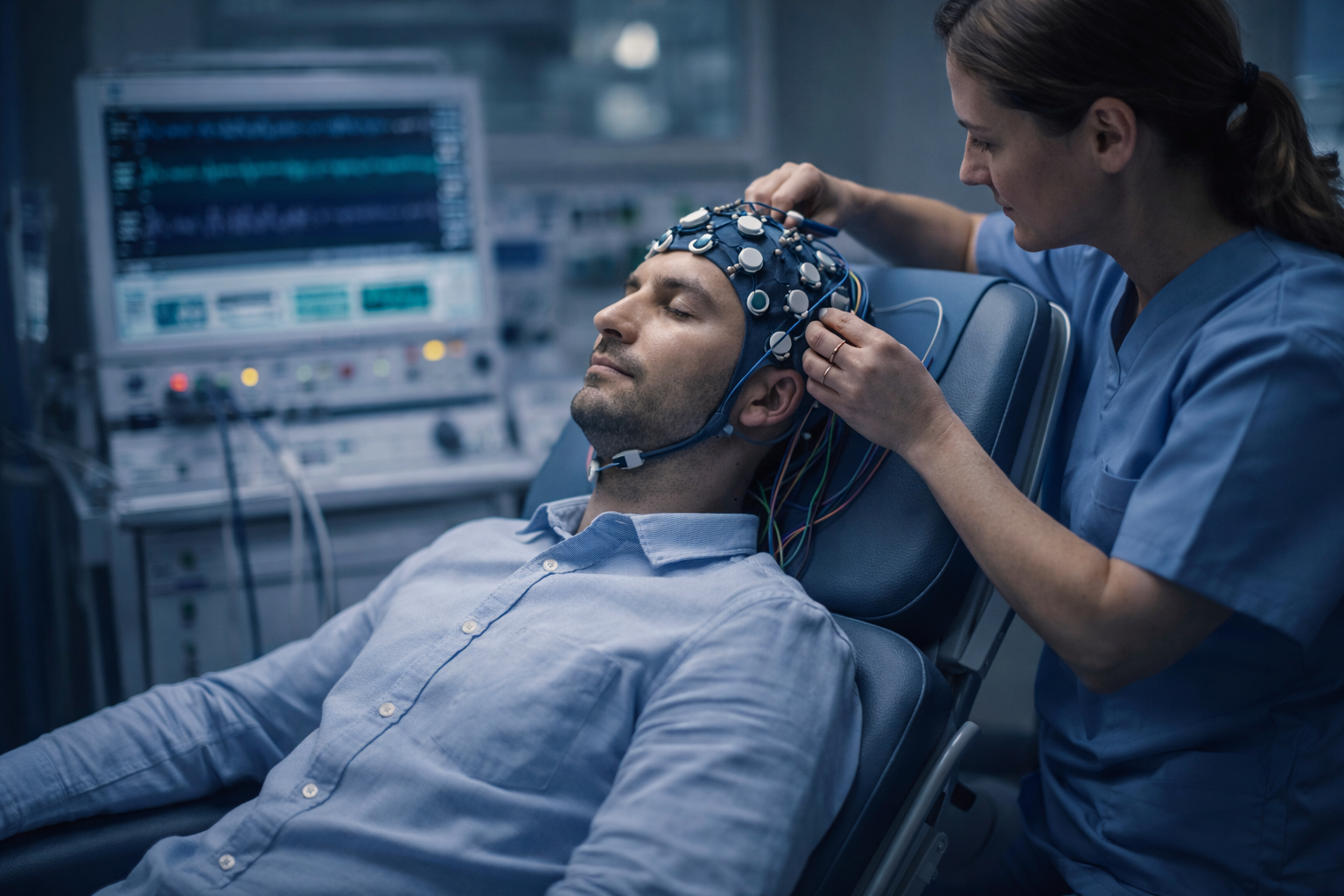
Sleep-Deprived EEG
Enhanced brain activity assessment to improve detection of seizure-related abnormalities.
Sleep-Deprived EEG
What is a Sleep-Deprived EEG?
A Sleep-Deprived EEG is a specialist electroencephalogram performed after a period of reduced sleep.
Sleep deprivation can increase the likelihood of detecting abnormal electrical brain activity, particularly in patients being assessed for epilepsy or unexplained seizure-like events.
The test records brain wave patterns using small electrodes placed on the scalp and may include both wakefulness and brief sleep during the recording.
What is it used for?
Sleep-Deprived EEG testing is commonly used to investigate:
- Suspected epilepsy when a routine EEG was normal
- Unexplained blackouts or seizure-like episodes
- Possible absence or focal seizures
- Episodes of altered awareness
- Abnormal neurological events triggered by fatigue
Sleep deprivation can increase diagnostic sensitivity in certain seizure disorders.
What is a Sleep-Deprived EEG?
A Sleep-Deprived EEG is a specialist electroencephalogram performed after a period of reduced sleep.
Sleep deprivation can increase the likelihood of detecting abnormal electrical brain activity, particularly in patients being assessed for epilepsy or unexplained seizure-like events.
The test records brain wave patterns using small electrodes placed on the scalp and may include both wakefulness and brief sleep during the recording.
What is it used for?
Sleep-Deprived EEG testing is commonly used to investigate:
- Suspected epilepsy when a routine EEG was normal
- Unexplained blackouts or seizure-like episodes
- Possible absence or focal seizures
- Episodes of altered awareness
- Abnormal neurological events triggered by fatigue
Sleep deprivation can increase diagnostic sensitivity in certain seizure disorders.
What to expect on the day
Clear, calm, and efficient – from setup through to reporting.
01 Arrive & setup
We’ll confirm your details, clinical history, and referral information. The clinician will check your sleep preparation and explain the procedure clearly before starting.
02 The Procedure
Electrodes are placed on the scalp to record brain activity. You’ll be asked to relax, and you may be encouraged to drift into light sleep during the recording. The test is painless and typically lasts 30–60 minutes, depending on the study type.
03 Results & Plan
Your study is reviewed by an experienced neurophysiology clinician. A formal report is produced and sent securely to your referring clinician to support diagnosis and next-step management.
What to expect on the day
Clear, calm, and efficient – from setup through to reporting.
01 Arrive & setup
We’ll confirm your details, clinical history, and referral information. The clinician will check your sleep preparation and explain the procedure clearly before starting.
02 The Procedure
Electrodes are placed on the scalp to record brain activity. You’ll be asked to relax, and you may be encouraged to drift into light sleep during the recording. The test is painless and typically lasts 30–60 minutes, depending on the study type.
03 Results & Plan
Your study is reviewed by an experienced neurophysiology clinician. A formal report is produced and sent securely to your referring clinician to support diagnosis and next-step management.
How to prepare
You will receive specific sleep instructions in advance. Typically, this involves:
- Reducing your sleep the night before the test (as advised)
- Washing your hair prior to the appointment
- Avoiding hair products (gel, spray, oils, conditioner)
- Continuing your usual medications unless advised otherwise
- Bringing a list of your current medications
If you are unsure about your sleep instructions, please contact us prior to your appointment.
FAQs
Why do I need to reduce my sleep?
Sleep deprivation can increase the likelihood of detecting abnormal brain activity, particularly in epilepsy assessments.
Is the test painful?
No. The electrodes are placed on the scalp and do not deliver any electrical current. The test is completely painless.
How long does it take?
A Sleep-Deprived EEG typically lasts 30–60 minutes, though this may vary depending on whether sleep is achieved during the recording.
Can I drive after the test?
Yes. The EEG itself does not affect your ability to drive. However, as you may be tired due to reduced sleep, please ensure you feel safe to travel home.
How to prepare
You will receive specific sleep instructions in advance. Typically, this involves:
- Reducing your sleep the night before the test (as advised)
- Washing your hair prior to the appointment
- Avoiding hair products (gel, spray, oils, conditioner)
- Continuing your usual medications unless advised otherwise
- Bringing a list of your current medications
If you are unsure about your sleep instructions, please contact us prior to your appointment.
FAQs
Why do I need to reduce my sleep?
Sleep deprivation can increase the likelihood of detecting abnormal brain activity, particularly in epilepsy assessments.
Is the test painful?
No. The electrodes are placed on the scalp and do not deliver any electrical current. The test is completely painless.
How long does it take?
A Sleep-Deprived EEG typically lasts 30–60 minutes, though this may vary depending on whether sleep is achieved during the recording.
Can I drive after the test?
Yes. The EEG itself does not affect your ability to drive. However, as you may be tired due to reduced sleep, please ensure you feel safe to travel home.