
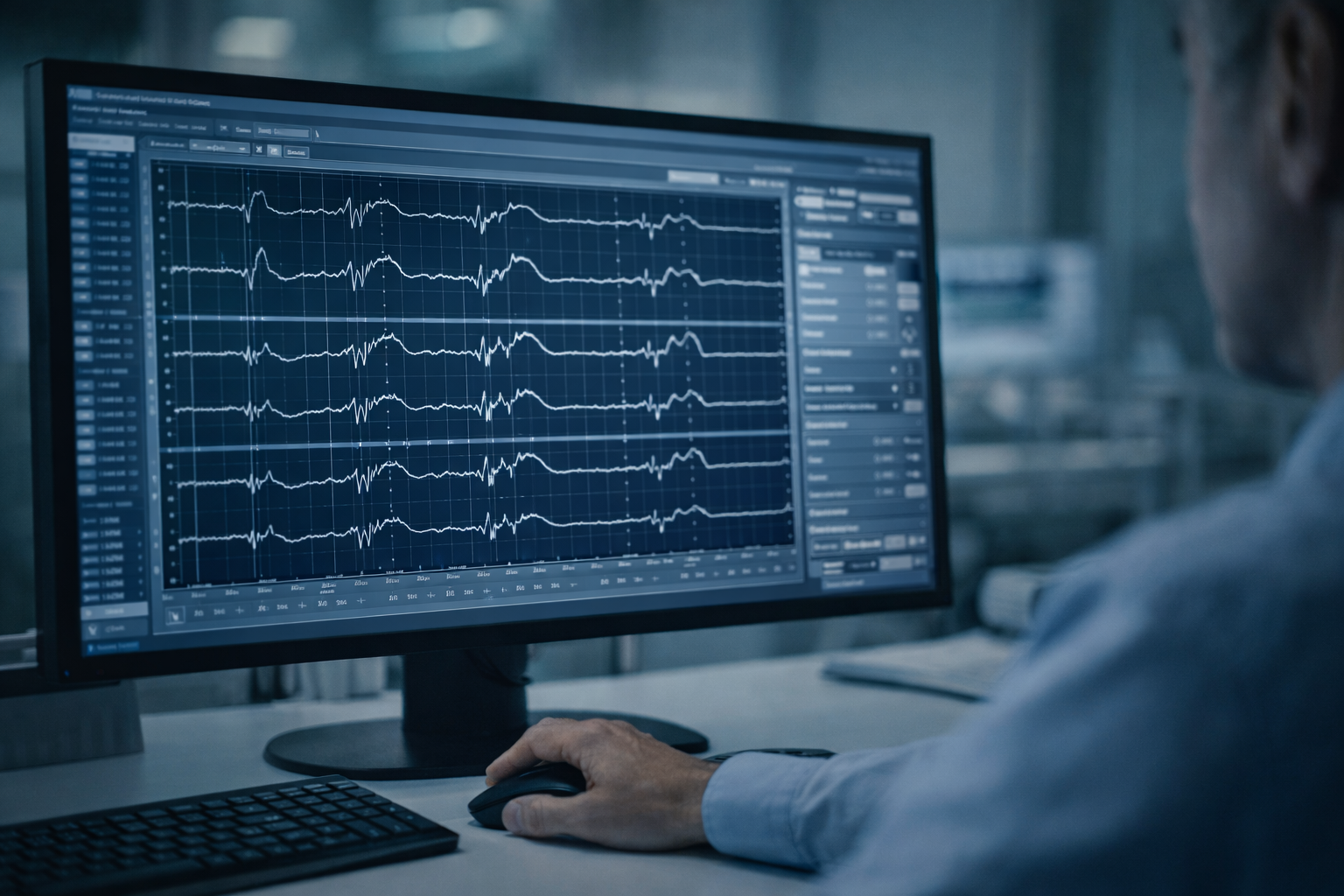
SSEPs (Somatosensory Evoked Potentials)
Aligned with your existing Neurophysiology service page structure and tone.
SSEPs (Somatosensory Evoked Potentials)
What are Somatosensory Evoked Potentials (SSEPs)?
SSEPs are specialist neurophysiology tests used to assess how well sensory signals travel from the peripheral nerves, through the spinal cord, and up to the brain.
During the test, small electrical stimuli are applied to specific nerves, usually in the arms or legs, and responses are recorded from the scalp and along the spinal pathway.
This helps evaluate the integrity of the central sensory pathways and detect potential disruption or delay in signal transmission.
What are SSEPs used for?
SSEPs are commonly used to investigate or monitor:
- Suspected spinal cord disorders
- Multiple sclerosis
- Cervical or lumbar spinal compression
- Demyelinating conditions
- Unexplained sensory symptoms (numbness, tingling, weakness)
- Intraoperative monitoring during spinal or neurosurgery
They provide objective information about sensory pathway function.
What are Somatosensory Evoked Potentials (SSEPs)?
SSEPs are specialist neurophysiology tests used to assess how well sensory signals travel from the peripheral nerves, through the spinal cord, and up to the brain.
During the test, small electrical stimuli are applied to specific nerves, usually in the arms or legs, and responses are recorded from the scalp and along the spinal pathway.
This helps evaluate the integrity of the central sensory pathways and detect potential disruption or delay in signal transmission.
What are SSEPs used for?
SSEPs are commonly used to investigate or monitor:
- Suspected spinal cord disorders
- Multiple sclerosis
- Cervical or lumbar spinal compression
- Demyelinating conditions
- Unexplained sensory symptoms (numbness, tingling, weakness)
- Intraoperative monitoring during spinal or neurosurgery
They provide objective information about sensory pathway function.
Tests we provide
Central Nervous System Evoked Potentials
Visual Evoked Potentials (VEP)
Optic pathway conduction studies.
Motor Evoked Potentials (MEP)
Corticospinal tract integrity testing.
Brainstem Auditory Evoked Potentials (BAEP/ABR)
Pontine and midbrain pathway assessment.
Somatosensory Evoked Potentials (SSEP)
Dorsal column pathway evaluation.
Tests we provide
Central Nervous System Evoked Potentials
Visual Evoked Potentials (VEP)
Optic pathway conduction studies.
Brainstem Auditory Evoked Potentials (BAEP/ABR)
Pontine and midbrain pathway assessment.
Somatosensory Evoked Potentials (SSEP)
Dorsal column pathway evaluation.
Motor Evoked Potentials (MEP)
Corticospinal tract integrity testing.
Small Fibre & Autonomic Testing
Quantitative Sensory Testing (QST)
Thermal and vibration threshold testing. (Under development)
Sudomotor Testing
QSART and Sympathetic Skin Response (SSR). (Under development)
What to expect on the day
Clear, calm, and efficient – from setup through to reporting.
01 Arrive & setup
We’ll confirm your details and referral information. Recording electrodes are placed on the scalp and sometimes along the neck or back. Stimulation electrodes are positioned over specific nerves in the arms or legs.
The procedure is explained clearly before testing begins.
02 The Procedure
Small electrical pulses are delivered to the nerve being tested. These may feel like brief tingling sensations but are well tolerated.
Responses are recorded and analysed in real time. The test is safe and typically lasts 30–60 minutes, depending on the number of nerves assessed.
03 Results & Plan
Your recordings are reviewed by an experienced neurophysiology clinician.
A formal report is produced and sent securely to your referring clinician to support diagnosis and treatment planning.
What to expect on the day
Clear, calm, and efficient – from setup through to reporting.
01 Arrive & setup
We’ll confirm your details and referral information. Recording electrodes are placed on the scalp and sometimes along the neck or back. Stimulation electrodes are positioned over specific nerves in the arms or legs.
The procedure is explained clearly before testing begins.
02 The Procedure
Small electrical pulses are delivered to the nerve being tested. These may feel like brief tingling sensations but are well tolerated.
Responses are recorded and analysed in real time. The test is safe and typically lasts 30–60 minutes, depending on the number of nerves assessed.
03 Results & Plan
Your recordings are reviewed by an experienced neurophysiology clinician.
A formal report is produced and sent securely to your referring clinician to support diagnosis and treatment planning.
How to prepare
To help ensure accurate results, please:
- Wear comfortable, loose-fitting clothing
- Avoid heavy moisturisers on arms or legs
- Continue medications unless advised otherwise
- Bring a list of current medications
No fasting or sedation is required.
FAQs
Is the test painful?
The electrical stimulation may cause a brief tingling or tapping sensation, but it is generally well tolerated and not considered painful.
How long does the test take?
SSEP studies typically take 30–60 minutes, depending on how many nerves are assessed.
Are SSEPs safe?
Yes. The test uses low-level electrical stimulation and is routinely performed in specialist neurophysiology settings.
When will I receive results?
Once analysed, a formal report is produced and sent securely to your referring clinician to guide next steps.
How to prepare
To help ensure accurate results, please:
- Wear comfortable, loose-fitting clothing
- Avoid heavy moisturisers on arms or legs
- Continue medications unless advised otherwise
- Bring a list of current medications
No fasting or sedation is required.
FAQs
Is the test painful?
The electrical stimulation may cause a brief tingling or tapping sensation, but it is generally well tolerated and not considered painful.
How long does the test take?
SSEP studies typically take 30–60 minutes, depending on how many nerves are assessed.
Are SSEPs safe?
Yes. The test uses low-level electrical stimulation and is routinely performed in specialist neurophysiology settings.
When will I receive results?
Once analysed, a formal report is produced and sent securely to your referring clinician to guide next steps.